Monday, December 15, 2008
Thursday, November 06, 2008
Narikuravars: An ongoing Obsession
Two years ago, I first came across this group as part of a College Project. Ever since, I have been interested in working with them. I know soon, I would have gathered the necessary skills, ideas and funds to work with them again. Below are 7 chapters of the dissertation I compiled on them. I haven't returned to Chennai after that, and so it might be quite outdated.
I do keep in touch with what is reported to be happening with the community. I've read some stories about land 'pattas' being issued to them, and more recently, that they are being incorporated into the pilot site of the Madras High Court's recently launched Zero Waste Management Programme.[http://www.expressbuzz.com/edition/story.aspx?Title=Zero+waste+management+gets+rooted&artid=vGMY|KaCnGU=&SectionID=lifojHIWDUU=&MainSectionID=lifojHIWDUU=&SEO=&SectionName=rSY|6QYp3kQ=]
A researcher called Siva Chithirai had a Photo Exhibit recently at the Alliance Francaise, Chennai, with them as the subject. Here's his interview in the Deccan Herald.
http://www.deccanherald.com/Content/Sep282008/finearts2008092792392.asp
Enjoy the read. If you want to collaborate, share, discuss, do write in.
Love and peace.
I do keep in touch with what is reported to be happening with the community. I've read some stories about land 'pattas' being issued to them, and more recently, that they are being incorporated into the pilot site of the Madras High Court's recently launched Zero Waste Management Programme.[http://www.expressbuzz.com/edition/story.aspx?Title=Zero+waste+management+gets+rooted&artid=vGMY|KaCnGU=&SectionID=lifojHIWDUU=&MainSectionID=lifojHIWDUU=&SEO=&SectionName=rSY|6QYp3kQ=]
A researcher called Siva Chithirai had a Photo Exhibit recently at the Alliance Francaise, Chennai, with them as the subject. Here's his interview in the Deccan Herald.
http://www.deccanherald.com/Content/Sep282008/finearts2008092792392.asp
Enjoy the read. If you want to collaborate, share, discuss, do write in.
Love and peace.

Narikuravars: Chapter 1
CHAPTER 1 – An introduction
Five settlements visited and it was obvious. Here is a tribal group, scattered over a ‘progressive’ state. But progress has left them in the lurch, struggling to find a strong foothold.
But first, a tint of their enchanting history.
They are part of the well-known ‘Romas’ or Gypsies of the world and are referred to as the Gypsies of south India. “Their origin seems to be from Rajasthan. The movement into southern India seems to be based largely on their need for food.
Many many years ago, recount the elders, ...our grandfathers spoke of living in caves and in leaf huts and wandered right upto the seven hills of Tirupati in search of game. There were deer and boar and many of our people.
Ancient hunters far away, down in the foothills, where the river Kortallayar, flows towards the Bay of Bengal, the land was occupied for thousands and thousands of years by stone tool making prehistoric tribes which are now called kuravas. Tools of these long-dead hunter-gatherers, lie buried deep within ancient red soils and scattered on the river bed and hilly mounds.” (http://www.zen-forum.com/a13/b2001/c11/d4/e690/z7)
Now push the fast forward button, to come back to their harsh present.
It’s an old story - a tribal group, whose nomadic nature makes it easier for the government to ignore its fundamental rights. Years after they gave up their ‘problematic’ (for the government) traditional lifestyle of hunting foxes and traveling around, basic amenities like housing, water and power supply are still a rarity in most settlements.
In some cases, ‘pattas’ have been granted. But these are temporary land leases and the government can kick them out whenever and however… no questions asked. It has happened. In the case of the 1991 Gypsy school which was to be shut down to accommodate Anna University’s expansion of its premises.
And so they continue to ‘salvage’ a living by rag picking and bead making and subsist in an urban jungle they are still trying to understand and break into.
Oddly enough, only in Tamil Nadu they are not recognized as a tribe…. Their counterparts in Karnataka, the ‘Hakki Pikkis’, enjoy Schedule Tribe (ST) status.
Welcome to the world of the Narekoravas in Chennai.
While doing the Key Issues project, Group D stumbled upon the range of problems facing this group and their daily battles to feed themselves. Struck by the dispassion with which we pass these people by, everyday, without a second glance, we spent our July and September weekends visiting three Narikurava settlements in Thiruvanmiyur, Kottur and Avadi.
After our presentation was dismissed, due to what I argue, was a tangential remark; I promised myself I wouldn’t let this key issue die that easily. It was not just another project and with another deadline.
I bumped into them occasionally in Mamallapuram and suffered a barrage of pleas to buy their beads. These brief meetings never let them out of my wandering mind.
Tight schedules and a massive effort on the Investigative project diverted my attention from their needs for almost five months. The scattered settlements in distant areas of Chennai furthered the distance. With the deadline for this dissertation looming, I pondered the folly of taking up such a huge issue, with the limited time and expertise I had to offer.
But something an environmental expert, Dr. Swaminathan said, revived my drive. He said that it didn’t matter, however inadequate or inconclusive a research is. Not only will it act as a starting point for further investigation, but it also helps communicate the issue to different people. Who knows? Maybe, hopefully, someone will read this project and develop an interest in the gypsies.
So I finalized the topic for my dissertation – Education as a means of empowerment among the Narikuravas/ gypsies in Chennai. Finding little solace in the fact that I had kept my promise to myself and to the gypsies, I revived my fieldwork. Months after my first visits to the settlements, I found two others in Injambakkam and Poonjeri, in far worse shape. Growing despair…
My initial surprise at finding mention of the Narikuravas was replaced with anger, when the articles repeatedly covered the arrests of various gypsies who were caught poaching. After speaking to just a few gypsies I realized that these communications were yielding few new leads. The issue was obvious after the first presentation we had made. Their situation hadn’t changed… much… Frustration.
The Thiruvanmiyur leader and missionary, B.M Rajkumar hired web developer who was very quick to come and collect copies of all my gypsy photographs. More than three months later, the website is nowhere to be found on the information highway.
Even my attempts to communicate with the authorities failed. All dead ends and no responses. There’s no turning back.
This project is an attempt to help the reader understand the Narikuravas, with perhaps a bit more sensitivity. Their inherently ostentatious nature intimidates the unwarned visitor. Still, their spirit is admirable and in my eye, I can’t help but behold these people as beautiful and a little special, especially after they captured my imagination, five months ago.
Here is a brief synopsis of my dissertation on these deserted people.
The first chapter talks about their status, both legal and social. The discrimination they face and why they continue to struggle to achieve Schedule Tribe (ST) status.
The second is on the gypsy occupations, ranging from the traditional, to the transitional. It aims to suggest that the gypsies have yet to be reconciled into our society.
The third is an insight into their lifestyle, the problems it poses and their living conditions.
The fourth chapter seeks to find possible solutions to their problems. It also brings into question, the old contention of whether or not to mainstream tribal education.
The fifth chapter contains newspaper clippings that covered various Narikurava interactions with the government and other organizations that were fruitful and benefited them.
The epilogue is to ground the information in the previous chapters in the context of what’s been happening more recently and in other parts in Tamil Nadu.
Happy reading.
Five settlements visited and it was obvious. Here is a tribal group, scattered over a ‘progressive’ state. But progress has left them in the lurch, struggling to find a strong foothold.
But first, a tint of their enchanting history.
They are part of the well-known ‘Romas’ or Gypsies of the world and are referred to as the Gypsies of south India. “Their origin seems to be from Rajasthan. The movement into southern India seems to be based largely on their need for food.
Many many years ago, recount the elders, ...our grandfathers spoke of living in caves and in leaf huts and wandered right upto the seven hills of Tirupati in search of game. There were deer and boar and many of our people.
Ancient hunters far away, down in the foothills, where the river Kortallayar, flows towards the Bay of Bengal, the land was occupied for thousands and thousands of years by stone tool making prehistoric tribes which are now called kuravas. Tools of these long-dead hunter-gatherers, lie buried deep within ancient red soils and scattered on the river bed and hilly mounds.” (http://www.zen-forum.com/a13/b2001/c11/d4/e690/z7)
Now push the fast forward button, to come back to their harsh present.
It’s an old story - a tribal group, whose nomadic nature makes it easier for the government to ignore its fundamental rights. Years after they gave up their ‘problematic’ (for the government) traditional lifestyle of hunting foxes and traveling around, basic amenities like housing, water and power supply are still a rarity in most settlements.
In some cases, ‘pattas’ have been granted. But these are temporary land leases and the government can kick them out whenever and however… no questions asked. It has happened. In the case of the 1991 Gypsy school which was to be shut down to accommodate Anna University’s expansion of its premises.
And so they continue to ‘salvage’ a living by rag picking and bead making and subsist in an urban jungle they are still trying to understand and break into.
Oddly enough, only in Tamil Nadu they are not recognized as a tribe…. Their counterparts in Karnataka, the ‘Hakki Pikkis’, enjoy Schedule Tribe (ST) status.
Welcome to the world of the Narekoravas in Chennai.
While doing the Key Issues project, Group D stumbled upon the range of problems facing this group and their daily battles to feed themselves. Struck by the dispassion with which we pass these people by, everyday, without a second glance, we spent our July and September weekends visiting three Narikurava settlements in Thiruvanmiyur, Kottur and Avadi.
After our presentation was dismissed, due to what I argue, was a tangential remark; I promised myself I wouldn’t let this key issue die that easily. It was not just another project and with another deadline.
I bumped into them occasionally in Mamallapuram and suffered a barrage of pleas to buy their beads. These brief meetings never let them out of my wandering mind.
Tight schedules and a massive effort on the Investigative project diverted my attention from their needs for almost five months. The scattered settlements in distant areas of Chennai furthered the distance. With the deadline for this dissertation looming, I pondered the folly of taking up such a huge issue, with the limited time and expertise I had to offer.
But something an environmental expert, Dr. Swaminathan said, revived my drive. He said that it didn’t matter, however inadequate or inconclusive a research is. Not only will it act as a starting point for further investigation, but it also helps communicate the issue to different people. Who knows? Maybe, hopefully, someone will read this project and develop an interest in the gypsies.
So I finalized the topic for my dissertation – Education as a means of empowerment among the Narikuravas/ gypsies in Chennai. Finding little solace in the fact that I had kept my promise to myself and to the gypsies, I revived my fieldwork. Months after my first visits to the settlements, I found two others in Injambakkam and Poonjeri, in far worse shape. Growing despair…
My initial surprise at finding mention of the Narikuravas was replaced with anger, when the articles repeatedly covered the arrests of various gypsies who were caught poaching. After speaking to just a few gypsies I realized that these communications were yielding few new leads. The issue was obvious after the first presentation we had made. Their situation hadn’t changed… much… Frustration.
The Thiruvanmiyur leader and missionary, B.M Rajkumar hired web developer who was very quick to come and collect copies of all my gypsy photographs. More than three months later, the website is nowhere to be found on the information highway.
Even my attempts to communicate with the authorities failed. All dead ends and no responses. There’s no turning back.
This project is an attempt to help the reader understand the Narikuravas, with perhaps a bit more sensitivity. Their inherently ostentatious nature intimidates the unwarned visitor. Still, their spirit is admirable and in my eye, I can’t help but behold these people as beautiful and a little special, especially after they captured my imagination, five months ago.
Here is a brief synopsis of my dissertation on these deserted people.
The first chapter talks about their status, both legal and social. The discrimination they face and why they continue to struggle to achieve Schedule Tribe (ST) status.
The second is on the gypsy occupations, ranging from the traditional, to the transitional. It aims to suggest that the gypsies have yet to be reconciled into our society.
The third is an insight into their lifestyle, the problems it poses and their living conditions.
The fourth chapter seeks to find possible solutions to their problems. It also brings into question, the old contention of whether or not to mainstream tribal education.
The fifth chapter contains newspaper clippings that covered various Narikurava interactions with the government and other organizations that were fruitful and benefited them.
The epilogue is to ground the information in the previous chapters in the context of what’s been happening more recently and in other parts in Tamil Nadu.
Happy reading.
Narikuravars: Chapter 2
CHAPTER TWO - Social and Legal status
Social
One evening at his house on Besant Nagar beach road, former Arts Editor, Economic Times and writer on critical issues of politics and culture said, “Even the stray dogs don’t like them, they bark at an approaching Narikurava”.
A Google search procures two main categories of information on the ‘Narikuravas’. The first kind is the research papers by Madras Christian College’s, Gift Siromoney. Due to the lack of research and written material gathered about the gypsies, these 1970’s papers on topics like their music, ceremonies and trapping techniques are valuable peepholes. (http://www.cmi.ac.in/gift/narikorava.htm) Now a little out-dated, after the doctor passed away, I am yet to find scholarly interest in these gypsies.
The second refers to news articles with various instances of Narikuravas being arrested under the Wildlife Protection Act of 1972, because they were caught poaching. An article ‘Suspects forever’ in Frontline by S. Viswanathan brings out the inhumane treatment that plague tribes, years after “The Criminal Tribes Act, 1871,” has been repealed.
From the article - “Under the Act 150 notified castes of "hereditary criminals" within the Hindu system were to be kept under police surveillance. More castes were added to the list. The branding of these communities, as "criminal" was not based on the notion of heredity but rather as a community profession passed on from one generation to the next. The Act, therefore, provided for establishing reformatory schools and settlements for the reclamation of these people. Their movements were restricted to specific areas and the Act provided for their arrest without warrant if there was any violation.”
Imagine. Forced to give up their traditional occupation, because the ‘modern’ world brands these activities as ‘criminal’. The Act even provides for the setting up of ‘reformatory schools.’ At least these would help train the Narikuravas in other trades, which the world still values and considers legal.
But because of discrimination, they are not allowed into the corporation schools. Besides, buying textbooks and stitching uniforms is expensive and more than most gypsies can afford, Vadivel, the Injambakkam leader lamented.
Few are like the ‘thalever’ or village head of the Poonjeri settlement, Kaniappan, who can afford to send two of his four children to the nearest school, three kilometers away at Mamallapuram. He said that putting one kid through school costs him Rs 800 and added that the Saidapet School for gypsies was good, but too far away.
Legal
Founder of Narikurava Educational and Welfare Society, C.Mahendran told reporters from the ‘Hindu’ that there were about three lakh Narikuravas in Tamil Nadu.
The State government, the Tribal Research Institute and the Department of Anthropology of the University of Madras have even recommended that the Narikuravas be classified as Schedule Tribes (ST). But the Center asked for validation and the matter has been left at that, the article revealed.
It then goes on to explain how the Union Government objected to and later stopped the State Department of Adi Dravida Welfare from extending concessions given to ST, to Narikuravas.
The center also asked for further information to establish the ‘tribal traits of the Narikurava community.’
On the State Government’s request, the Institute of Tribal Research then conducted a study and made a favourable recommendation, which was then seconded by the Department of Anthropology of the University of Madras.
Mahendran was quoted saying that even though the Narikuravas should have been included in the list right from 1964, red tape has prevented the matter from being resolved all these years. The meager support from a few Voluntary organizations has not translated into results as yet.
Granted Backward Class (BC) status in 1975 and then Most Backward Class (MBC)
1989, the gypsies continue their struggle to attain ST status.
Social
One evening at his house on Besant Nagar beach road, former Arts Editor, Economic Times and writer on critical issues of politics and culture said, “Even the stray dogs don’t like them, they bark at an approaching Narikurava”.
A Google search procures two main categories of information on the ‘Narikuravas’. The first kind is the research papers by Madras Christian College’s, Gift Siromoney. Due to the lack of research and written material gathered about the gypsies, these 1970’s papers on topics like their music, ceremonies and trapping techniques are valuable peepholes. (http://www.cmi.ac.in/gift/narikorava.htm) Now a little out-dated, after the doctor passed away, I am yet to find scholarly interest in these gypsies.
The second refers to news articles with various instances of Narikuravas being arrested under the Wildlife Protection Act of 1972, because they were caught poaching. An article ‘Suspects forever’ in Frontline by S. Viswanathan brings out the inhumane treatment that plague tribes, years after “The Criminal Tribes Act, 1871,” has been repealed.
From the article - “Under the Act 150 notified castes of "hereditary criminals" within the Hindu system were to be kept under police surveillance. More castes were added to the list. The branding of these communities, as "criminal" was not based on the notion of heredity but rather as a community profession passed on from one generation to the next. The Act, therefore, provided for establishing reformatory schools and settlements for the reclamation of these people. Their movements were restricted to specific areas and the Act provided for their arrest without warrant if there was any violation.”
Imagine. Forced to give up their traditional occupation, because the ‘modern’ world brands these activities as ‘criminal’. The Act even provides for the setting up of ‘reformatory schools.’ At least these would help train the Narikuravas in other trades, which the world still values and considers legal.
But because of discrimination, they are not allowed into the corporation schools. Besides, buying textbooks and stitching uniforms is expensive and more than most gypsies can afford, Vadivel, the Injambakkam leader lamented.
Few are like the ‘thalever’ or village head of the Poonjeri settlement, Kaniappan, who can afford to send two of his four children to the nearest school, three kilometers away at Mamallapuram. He said that putting one kid through school costs him Rs 800 and added that the Saidapet School for gypsies was good, but too far away.
Legal
Founder of Narikurava Educational and Welfare Society, C.Mahendran told reporters from the ‘Hindu’ that there were about three lakh Narikuravas in Tamil Nadu.
The State government, the Tribal Research Institute and the Department of Anthropology of the University of Madras have even recommended that the Narikuravas be classified as Schedule Tribes (ST). But the Center asked for validation and the matter has been left at that, the article revealed.
It then goes on to explain how the Union Government objected to and later stopped the State Department of Adi Dravida Welfare from extending concessions given to ST, to Narikuravas.
The center also asked for further information to establish the ‘tribal traits of the Narikurava community.’
On the State Government’s request, the Institute of Tribal Research then conducted a study and made a favourable recommendation, which was then seconded by the Department of Anthropology of the University of Madras.
Mahendran was quoted saying that even though the Narikuravas should have been included in the list right from 1964, red tape has prevented the matter from being resolved all these years. The meager support from a few Voluntary organizations has not translated into results as yet.
Granted Backward Class (BC) status in 1975 and then Most Backward Class (MBC)
1989, the gypsies continue their struggle to attain ST status.
Narikuravars: Chapter 3
CHAPTER 3 – Occupation/ Livelihood
Traditionally hunters and gatherers from the mountains, the trapping methods used by the Narikuravas have been documented by Madras Christian College’s Gift Siromeney. He wrote, “Adept in the art of catching animals and birds, Narikoravas can even trap a jackal, considered to be the most cunning of all animals. It is this ability, which gives them their name NarikoravaYour browser may not support display of this image.the jackal people. In order to catch a jackal, the man builds an enclosure made of net, sits inside and mimics the howl of a jackal. When the hapless animal approaches the net to investigate, he clubs it. To trap partridges, which are much sought after for the pot, the Narikoravas use domesticated birds, which act as decoys to catch the wild ones. This is the reason why they are also called Kuruvikaran, or the birdmen. In fact, supplying game birds to town dwellers has been one of their traditional occupations. With the implementation of the Wild Life Protection Act, the Narikoravas had to change their livelihood and they have consequently switched over to making beads and selling knick-knacks.”
Former Arts Editor, Economic Times and writer on critical issues of politics and culture recounted the incident when a stray fox had gotten into his compound. The thick underbrush surrounding the house complicated the process of its extrication and expulsion. The expert animal catchers couldn’t do it. So finally, two Narikuravas came to the rescue, when they snagged the creature in two hours, explained an amused Menon.
Last October, while on a field visit to the Thiruvanmiyur settlement, some of the young men sported catapults, ‘undikavv’, which they said they targeted squirrels and birds with. Soon, they revealed that the non-vegetarian elements in their diet were varied and ranged from cats to crows. A brave lad, Shiva even displayed a fox skin that he said he had killed only a week earlier.
As Dr. Gift mentioned, the enforcement of the Wildlife Protection Act left the Narikuravas ‘hunting’ for work. They found an alternative in bead making. But Lalitha, the wife of Injambakkam ‘thalever’, Vadivel, explained that ‘beads need capital.’ She explained that if you have some money to invest in buying beads, then bead making is an option. ‘When you are a rag picker and earn Rs 100 per bag, it is very hard to save money. So, you can’t think of investing in anything.’ It is a hand to mouth existence when you are a rag picker, she added.
But even bead making has caused its own problems. Business is irregular, and some families dominate the market. There is an obvious difference in quality, since better raw materials like beads and wires can be purchased with more capital. And money has altered the traditional distribution of power. The leader at Thiruvanmiyur, Kumar, was found drunk and asleep one afternoon in September, in his little hovel with a colour TV. Further probing explained the curious contrast between his modest but ‘pucca’ abode and the bigger ‘pucca’ house opposite. The family living in the ‘pucca’ house was one of the most economically successful families there. Rakamma, the ‘thalever’s’ wife, said that they even governed more respect. She lamented that as a result her husband had taken hard and fast to the bottle.
On another visit to the Thiruvanmiyur settlement on Diwali, 2005, the holiday spirit was broken by the emanating murmur of work. From grandparents to grandchildren, many gypsies were seen hard at work, breaking bulbs, collecting metal bottle caps and stripping plastic insulation off wires. All this to earn a few rupees from the scrap metal, one of the older busy bodies explained.
Exnora, an NGO, guided by the watchwords "EXcellent, NOvel, and RAdical," claim to have improved to economic and social standard of the Narikuravas by training and hiring them as ‘street beautifiers’ in Civic Exnoras. The website now boasts “They, therefore, on their own started segregating the wastes into a number of categories, consolidated the recoverables and sold them to the waste recyclers. This helped every street beautifier earn a profit of about Rs. 500-600 per month, which augmented their monthly salary of Rs.900 per month...”
But Lalitha from Injambakkam explained that the Panchayat Board has hired staff to clean the streets. “So now we find it is very hard to find litter on the streets. Before we could earn about Rs 150 a day. Now it has become very hard,” she stressed. Even in the private sector, giants like Onyx have drastically reduced the areas where the gypsies can salvage a living through rag picking.
Situated in a school compound, all the Injambakkam settlement residents are rag pickers. They shifted residence due to overcrowding in the Thiruvanmiyur settlement. 19 children, who used to go to school at Thiruvanmiyur, have now stopped their education. Now, none of the children go to school. Lalitha said that she would like any job… other than picking papers. “You need to be able to pay for school uniforms,” she added.
Most times, the children are rag pickers themselves because they need to supplement their parents’ income. Besides, there are health hazards to rag picking like TB, Asthma and cancer.
At the Avadi settlement, the dominant occupation is the making and selling of plastic flowers and soft toys. In the Kotturpuram settlement, there are a few gypsies who train animal and birds for the movies. The white doves used in the movie ‘Chandramukhi’ are also here, along with their trainer.
From the accounts above, it seems obvious that they have yet to carve out a niche in the modern world. The transitional occupations of rag picking, bead making, soft toy making and training animals have not enhanced their socio-economical condition. Rather, these have just allowed them to subsist.
Traditionally hunters and gatherers from the mountains, the trapping methods used by the Narikuravas have been documented by Madras Christian College’s Gift Siromeney. He wrote, “Adept in the art of catching animals and birds, Narikoravas can even trap a jackal, considered to be the most cunning of all animals. It is this ability, which gives them their name NarikoravaYour browser may not support display of this image.the jackal people. In order to catch a jackal, the man builds an enclosure made of net, sits inside and mimics the howl of a jackal. When the hapless animal approaches the net to investigate, he clubs it. To trap partridges, which are much sought after for the pot, the Narikoravas use domesticated birds, which act as decoys to catch the wild ones. This is the reason why they are also called Kuruvikaran, or the birdmen. In fact, supplying game birds to town dwellers has been one of their traditional occupations. With the implementation of the Wild Life Protection Act, the Narikoravas had to change their livelihood and they have consequently switched over to making beads and selling knick-knacks.”
Former Arts Editor, Economic Times and writer on critical issues of politics and culture recounted the incident when a stray fox had gotten into his compound. The thick underbrush surrounding the house complicated the process of its extrication and expulsion. The expert animal catchers couldn’t do it. So finally, two Narikuravas came to the rescue, when they snagged the creature in two hours, explained an amused Menon.
Last October, while on a field visit to the Thiruvanmiyur settlement, some of the young men sported catapults, ‘undikavv’, which they said they targeted squirrels and birds with. Soon, they revealed that the non-vegetarian elements in their diet were varied and ranged from cats to crows. A brave lad, Shiva even displayed a fox skin that he said he had killed only a week earlier.
As Dr. Gift mentioned, the enforcement of the Wildlife Protection Act left the Narikuravas ‘hunting’ for work. They found an alternative in bead making. But Lalitha, the wife of Injambakkam ‘thalever’, Vadivel, explained that ‘beads need capital.’ She explained that if you have some money to invest in buying beads, then bead making is an option. ‘When you are a rag picker and earn Rs 100 per bag, it is very hard to save money. So, you can’t think of investing in anything.’ It is a hand to mouth existence when you are a rag picker, she added.
But even bead making has caused its own problems. Business is irregular, and some families dominate the market. There is an obvious difference in quality, since better raw materials like beads and wires can be purchased with more capital. And money has altered the traditional distribution of power. The leader at Thiruvanmiyur, Kumar, was found drunk and asleep one afternoon in September, in his little hovel with a colour TV. Further probing explained the curious contrast between his modest but ‘pucca’ abode and the bigger ‘pucca’ house opposite. The family living in the ‘pucca’ house was one of the most economically successful families there. Rakamma, the ‘thalever’s’ wife, said that they even governed more respect. She lamented that as a result her husband had taken hard and fast to the bottle.
On another visit to the Thiruvanmiyur settlement on Diwali, 2005, the holiday spirit was broken by the emanating murmur of work. From grandparents to grandchildren, many gypsies were seen hard at work, breaking bulbs, collecting metal bottle caps and stripping plastic insulation off wires. All this to earn a few rupees from the scrap metal, one of the older busy bodies explained.
Exnora, an NGO, guided by the watchwords "EXcellent, NOvel, and RAdical," claim to have improved to economic and social standard of the Narikuravas by training and hiring them as ‘street beautifiers’ in Civic Exnoras. The website now boasts “They, therefore, on their own started segregating the wastes into a number of categories, consolidated the recoverables and sold them to the waste recyclers. This helped every street beautifier earn a profit of about Rs. 500-600 per month, which augmented their monthly salary of Rs.900 per month...”
But Lalitha from Injambakkam explained that the Panchayat Board has hired staff to clean the streets. “So now we find it is very hard to find litter on the streets. Before we could earn about Rs 150 a day. Now it has become very hard,” she stressed. Even in the private sector, giants like Onyx have drastically reduced the areas where the gypsies can salvage a living through rag picking.
Situated in a school compound, all the Injambakkam settlement residents are rag pickers. They shifted residence due to overcrowding in the Thiruvanmiyur settlement. 19 children, who used to go to school at Thiruvanmiyur, have now stopped their education. Now, none of the children go to school. Lalitha said that she would like any job… other than picking papers. “You need to be able to pay for school uniforms,” she added.
Most times, the children are rag pickers themselves because they need to supplement their parents’ income. Besides, there are health hazards to rag picking like TB, Asthma and cancer.
At the Avadi settlement, the dominant occupation is the making and selling of plastic flowers and soft toys. In the Kotturpuram settlement, there are a few gypsies who train animal and birds for the movies. The white doves used in the movie ‘Chandramukhi’ are also here, along with their trainer.
From the accounts above, it seems obvious that they have yet to carve out a niche in the modern world. The transitional occupations of rag picking, bead making, soft toy making and training animals have not enhanced their socio-economical condition. Rather, these have just allowed them to subsist.
Narikuravars: Chapter 4
CHAPTER 4 – Lifestyle
Daniel Meshack and Chris Griffin in the introduction to their book ‘Conservation & Mobile Indigenous Peoples: Displacement, Forced Settlement and Sustainable Development’ sum up how they feel the Narikuravas have been displaced and forced to settle, even though they are nomadic in nature.
It reads “This chapter examines the displacement in Tamil Nadu of former Outcaste forest-dwellers known as Narikuravas, Vagri or Kurrivikaran, and the problems they face. Since they are neither agriculturalists nor a 'service caste' (see Mines 1984), or for that matter classified 'tribal' or 'indigenous' with an historical claim to stewardship of, or access to, particular country, they fall outside the social space usually examined by anthropologists. Rather, they are commercial nomads, peripatetics or Gypsies 2 who (like Gypsies else-where) have traditionally lived physically apart from surrounding populations and with little sense of identity or attachment to one particular locality (Werth 1993).
This raises the conceptual issue of whether 'displacement' and 'forced settlement' are appropriate terms to apply to such inveterate wanderers? And we will say they are. We will argue that 'displacement' here refers not to induced dislocation from time-honoured places per se but instead to displacement from a specific ecological niche without geographic boundary - namely, 'the forest'. Furthermore, we maintain that because such dislocation has compelled many Narikuravas to opt for more permanent settlement than previously, the term 'enforcement' is also appropriate.”
Even after being forced to settle, the hardship is far from over. The five settlements visited displayed varying degrees of pathos - the worst at Injambakkam. On entering the field, a school stands in the center. The ground was scattered with gypsies huddled outside their plastic sheeted tents. Our requests to talk to the leader alone were met with silent nods, but a group of 20 curious gypsies never left his side. The clannish sentiment of a tribe is hard to change even after years of urbanization.
While they hung on to every word and movement made, their leader, Vadivel, said that there were about 60 people (10 – 15 families) living in the compound of a school. He continued, “We came here six months ago. Before this we were living in Thiruvanmiyur. We came here to work because it was too crowded there. We have no ration cards because we have no door numbers. He then added, “It is the Republic of India, but we don’t have a place to stay. The government doesn’t care about us.”
The settlement at Poonjeri, three kilometers away from Mamallapuram, is slightly better off. The leader there is Kaniappan, a self-proclaimed martial arts expert. He told a circle of ten listeners how his clan had moved to Poonjeri ten years ago. Before that, he said, we were in Mamallapuram, opposite the Sea Shore Temple, for 25 years. The government promised us houses if we relocated to Poonjeri, he continued. After we did, in three years, a private contractor managed to half construct 100 houses. But before he completed the houses, he ran away, Kaniappan explained. In the summer, it gets very hot here. And we have no roof to protect us because all our houses are only half complete, he said.
In Mamallapuram, there were too many mosquitoes and our houses were too small, so Poonjeri is better, he continued. But there are no facilities here. There is only one hand pump here with irregular water supply. There is no market here to sell our beads, no hospital, or school either, his wife, Meghala interjected. All those were available in Mamallapuram, she said.
There are about 300 of us here and all of us have ration cards, he went on and the ration shop is in Mamallapuram. From April to June, we stay in Injambakkam or Thiruvanmiyur, Kaniappan continued. After that we all come here to find a market for our wares. There are 15 children here, out of which six go to the school in Mamallapuram.
The Thiruvanmiyur settlement has about 47 families who reside in the three rows of mainly brick houses. A few ‘pucca’ houses sprinkle the garbage-strewn lanes. Some houses here have electricity. The presence of trees around the settlement makes the weather bearable, some residents explained. They also told us how the lower caste hutments were towards the far end of the entrance, while the higher caste houses are towards the front.
From the beaded finery that some women displayed, another hierarchy was made obvious. The gypsies who earned more by selling their beads were the owners of the ‘pucca’ houses. Even the leader, Kumar, lives in a smaller house than them. There was a marked difference in the quality of the jewellery as well. The paint on one necklace purchased did not stand the test of water, whereas the necklaces purchased from the house opposite the leaders’ has lasted more than six months.
The 150 shelters here have only seven toilets. Cats, chickens and four feet tall bags of garbage add to the chaotic disarray on the lanes between the tidy rows. When you approach the end of the rows, where the lower caste people live, an old dilapidated board on the only two-storey building there, displays a faded sign – ‘Exnora.’ Here, the sanitation is at its worst.
In the Kottur settlement, most houses sport a colour TV. B.M. Rajkumar, a Christian missionary who moved here with his two kids eight years ago, is the leader here. Part of the Gypsy Christian Welfare Society (GCWS), he explained how the gypsies needed education and not economic benefits like television sets. The houses here were mainly made of brick with thatched roofs and had electricity connections.
The lack of tree cover here, however, makes the heat unbearable, complained some of the residents. Earlier this was a forest area, they explained. But they cleared up many forest areas in the process of urbanization.
The Avadi settlement lies just behind the bus depot. There are 25 hutments here. A pastor from the GCWS resides here as well. His house has electricity. He said that the government had originally given the land that they were living on now, to the police force. After they vacated the area in 1979, the Narikuravas came and set up camp there. There are also some other marginalized groups from Andhra Pradesh and Karnataka here. But he said that there was no interaction between the gypsies and these groups because they frowned upon the Narikuravas.
Daniel Meshack and Chris Griffin in the introduction to their book ‘Conservation & Mobile Indigenous Peoples: Displacement, Forced Settlement and Sustainable Development’ sum up how they feel the Narikuravas have been displaced and forced to settle, even though they are nomadic in nature.
It reads “This chapter examines the displacement in Tamil Nadu of former Outcaste forest-dwellers known as Narikuravas, Vagri or Kurrivikaran, and the problems they face. Since they are neither agriculturalists nor a 'service caste' (see Mines 1984), or for that matter classified 'tribal' or 'indigenous' with an historical claim to stewardship of, or access to, particular country, they fall outside the social space usually examined by anthropologists. Rather, they are commercial nomads, peripatetics or Gypsies 2 who (like Gypsies else-where) have traditionally lived physically apart from surrounding populations and with little sense of identity or attachment to one particular locality (Werth 1993).
This raises the conceptual issue of whether 'displacement' and 'forced settlement' are appropriate terms to apply to such inveterate wanderers? And we will say they are. We will argue that 'displacement' here refers not to induced dislocation from time-honoured places per se but instead to displacement from a specific ecological niche without geographic boundary - namely, 'the forest'. Furthermore, we maintain that because such dislocation has compelled many Narikuravas to opt for more permanent settlement than previously, the term 'enforcement' is also appropriate.”
Even after being forced to settle, the hardship is far from over. The five settlements visited displayed varying degrees of pathos - the worst at Injambakkam. On entering the field, a school stands in the center. The ground was scattered with gypsies huddled outside their plastic sheeted tents. Our requests to talk to the leader alone were met with silent nods, but a group of 20 curious gypsies never left his side. The clannish sentiment of a tribe is hard to change even after years of urbanization.
While they hung on to every word and movement made, their leader, Vadivel, said that there were about 60 people (10 – 15 families) living in the compound of a school. He continued, “We came here six months ago. Before this we were living in Thiruvanmiyur. We came here to work because it was too crowded there. We have no ration cards because we have no door numbers. He then added, “It is the Republic of India, but we don’t have a place to stay. The government doesn’t care about us.”
The settlement at Poonjeri, three kilometers away from Mamallapuram, is slightly better off. The leader there is Kaniappan, a self-proclaimed martial arts expert. He told a circle of ten listeners how his clan had moved to Poonjeri ten years ago. Before that, he said, we were in Mamallapuram, opposite the Sea Shore Temple, for 25 years. The government promised us houses if we relocated to Poonjeri, he continued. After we did, in three years, a private contractor managed to half construct 100 houses. But before he completed the houses, he ran away, Kaniappan explained. In the summer, it gets very hot here. And we have no roof to protect us because all our houses are only half complete, he said.
In Mamallapuram, there were too many mosquitoes and our houses were too small, so Poonjeri is better, he continued. But there are no facilities here. There is only one hand pump here with irregular water supply. There is no market here to sell our beads, no hospital, or school either, his wife, Meghala interjected. All those were available in Mamallapuram, she said.
There are about 300 of us here and all of us have ration cards, he went on and the ration shop is in Mamallapuram. From April to June, we stay in Injambakkam or Thiruvanmiyur, Kaniappan continued. After that we all come here to find a market for our wares. There are 15 children here, out of which six go to the school in Mamallapuram.
The Thiruvanmiyur settlement has about 47 families who reside in the three rows of mainly brick houses. A few ‘pucca’ houses sprinkle the garbage-strewn lanes. Some houses here have electricity. The presence of trees around the settlement makes the weather bearable, some residents explained. They also told us how the lower caste hutments were towards the far end of the entrance, while the higher caste houses are towards the front.
From the beaded finery that some women displayed, another hierarchy was made obvious. The gypsies who earned more by selling their beads were the owners of the ‘pucca’ houses. Even the leader, Kumar, lives in a smaller house than them. There was a marked difference in the quality of the jewellery as well. The paint on one necklace purchased did not stand the test of water, whereas the necklaces purchased from the house opposite the leaders’ has lasted more than six months.
The 150 shelters here have only seven toilets. Cats, chickens and four feet tall bags of garbage add to the chaotic disarray on the lanes between the tidy rows. When you approach the end of the rows, where the lower caste people live, an old dilapidated board on the only two-storey building there, displays a faded sign – ‘Exnora.’ Here, the sanitation is at its worst.
In the Kottur settlement, most houses sport a colour TV. B.M. Rajkumar, a Christian missionary who moved here with his two kids eight years ago, is the leader here. Part of the Gypsy Christian Welfare Society (GCWS), he explained how the gypsies needed education and not economic benefits like television sets. The houses here were mainly made of brick with thatched roofs and had electricity connections.
The lack of tree cover here, however, makes the heat unbearable, complained some of the residents. Earlier this was a forest area, they explained. But they cleared up many forest areas in the process of urbanization.
The Avadi settlement lies just behind the bus depot. There are 25 hutments here. A pastor from the GCWS resides here as well. His house has electricity. He said that the government had originally given the land that they were living on now, to the police force. After they vacated the area in 1979, the Narikuravas came and set up camp there. There are also some other marginalized groups from Andhra Pradesh and Karnataka here. But he said that there was no interaction between the gypsies and these groups because they frowned upon the Narikuravas.
Narikuravars: Chapter 5
CHAPTER 5 - SOLUTIONS?
Kofi Annan, Secretary General of the United Nations once said, "Education is a human right with immense power to transform. On its foundation rest the cornerstones of freedom, democracy and sustainable human development."
EDUCATION
The Gypsy English School was started in 1991 using funds from various organizations and Mr. Rajkumar’s own contributions. But it had to be closed in 1993, when Anna University wanted to expand its premises and the Government seized the ‘patta’ a temporary land lease. In the Kottur settlement, a gypsy school is currently under construction.
At present, there is a tuition center in Thiruvanmiyur, where the enrollment is poor. Some of the children from the Avadi settlement go to the nearby corporation school. The Injambakkam children have no such luck. Because of discrimination, they are not allowed to enroll in the corporation school. Prince, the son of pastor James Pandian had worked with these gypsies two years ago. He explained that the main problem was that the gypsies don’t maintain their cleanliness and appearance. Even his father, Pandian, a pastor in the Church of south India said, that he had to bribe the children with food, to get them to cut their hair. Tradition, he added, prevented them from doing so.
But Vadivel, the Injambakkam leader said that even after they decided to change their ways and cut the children’s hair, the schools didn’t allow them to join. “We live on the streets after all,” he said. The lack of water and housing facilities further hampers these attempts, he added.
But Christian influence has been more successful in other places. In Avadi, the resident pastor has set up an evening school for children of all ages. One teacher takes classes in Math and Tamil in the one roomed, concrete chapel with an asbestos roof. The children know the English alphabet. But the high drop out rates are prevalent here as well.
Considering the number of Narikuravas in Chennai, the number of children enrolled in corporation schools is poor. The girls are the major contributors to the high drop out rates observed at the various educational centers.
Most can’t afford the expenses of buying textbooks and uniforms. As Kaniappan, the Poonjeri settlement leader said, putting one child through school costs Rs 800. The nomadic nature of the tribe complicates the matter further. While it is true that the gypsies have settled down, they frequently transit to Gujarat and Delhi to buy beads. Also, like in the case of the Injambakkam and Poonjeri settlers, some are forced to move out of the bigger settlements at Thiruvanmiyur and Kotturpuram because of overcrowding and also to search for a market. This causes a high drop out rate, because the children move with their parents and do not stay back to finish their education.
Most children come from families who are too impoverished to put them in schools. So, they usually help their parents put enough food on the table for the family. From bead making to breaking bulbs, they do it all.
B.M Rajkumar, the resident representative of the Gypsy Christian Welfare Society (GCWS), has become the leader of the Thiruvanmiyur settlement. During the September visits, he stressed the necessity of these tribes acquiring ST status. He said that it was the only way that the people could move up the social ladder. The link between educational benefits and ST status is important, he explained. Only when the gypsies are recognized as tribals can they avail the educational reservations in institutions. As MBCs they are entitled to only economic benefits. But in the long run, only education can guarantee them a better life, he said.
Social worker and freelance journalist D. Manikandan disagrees. Resolving the problem of their categorization will take too long. By the time the gypsies get to reap the benefits, far too much time will have passed. He said that that the only way that the gypsies can move up in society is with the help of NGOs.
He recounted how, along with an NGO – ‘Contact’, much was achieved for the social upliftment of another marginalized group, the street performers – ‘Kazhaikoothadigal’. He said, “We provided water facility with the help of the local panchayat at Madurantagam. We also got them pipelines. This was the first time they got water supply through the Panchayat because even though the Panchayat was ready to give them the connection, they had no funds for pipes.”
He continued, “About 180 people were provided with one meal a day, at night for about two years. This we did to stop these people from going to sleep with empty stomachs every night. Altogether, we sent 72 children from Medavakkam, Madurantagam and Thiruvanmiyur to corporation schools. We bought them uniforms; got them admissions; spoke to the local school authorities. At first they refused because they thought that the parents would not be able to pay the fees and buy the necessary materials. We paid their fees and bought the materials.”
Manikandan, who obtained an award, from the Lions Club in 2004, for his social work, has reported about and also helped a lot of fishing communities along the East Coast Road to set up SHGs. But he said that he had never come across any Narikurava SHGs right from Thiruvanmiyur till Mamallapuram, a 40 km stretch.
The problem with the aid that has been reaching the gypsies is that it has come in spurts. Church of south India’s James Pandian along with his son, Prince, were unable to continue distributing biscuits and food packets to the Injambakkam settlers because of lack of funds. The sponsors had withdrawn, largely due to the fact that they were foreigners and had simply left the country.
Even the Poonjeri settlers recounted instances of European tourists helping them by sponsoring their food for a few months. But this kind of aid is limited and regulated according to the tourist season, which lasts for just a few months, from November to February.
State intervention has failed in some instances. For example, the Center for Development Studies – CIEDS Collective, formed in 1976, recounts how when state intervention failed with the ‘Hakki Pikkis’, the Karnataka counterparts of the Narikuravas, turned the tables by building on their traditional knowledge.
With the support of CIEDS – Deepa and Vimochana, women’s organisation that involves women from within and outside the Collective, the ‘Hakki Pikki and Iruliga Adivasi Sangha’ was formed in 2002.
“The Hakki Pikkis have worked with different kinds of natural fibres for weaving very fine bird trapping nets and sleeping mats… As part of its attempts to regenerate traditional craft and skills and make them more viable both in the local rural and larger urban markets, the Sangha has begun to explore the possibility of using banana and other natural fibres like corn and Kathale to weave bags and other utilitarian and aesthetic products like mobile covers, table mats, coasters etc.”
The gypsy school in Saidapet is no corporation school. It seeks to build on the existing knowledge of the gypsies. But the geographical location of the school prevents most gypsies from availing the facilities there. It is far away from most settlements and as Kaniappan from Poonjeri explained, the bus fares are too exorbitant for the gypsies.
After filling Manikandan in on the problems faced with educating the gypsies, he replied, “The state government should build night schools at each center, so that during the day, they (the children), can go to work. Also, water facilities should be provided so that they can improve their hygiene. Like in the street performers’ upliftment programme, there is a need for an NGO to act like a buffer between the state and the Narikuravas, for their situation to improve.”
But, without a constant NGO presence, in the crucial initial stages especially, he warned, things might revert. Even though the NGO, Contact withdrew after two years, he said, on follow up visits, he had found that the children had stayed in school, even though their parents were away in search of work. He said that even the water facilities were still functioning well.
Kofi Annan, Secretary General of the United Nations once said, "Education is a human right with immense power to transform. On its foundation rest the cornerstones of freedom, democracy and sustainable human development."
EDUCATION
The Gypsy English School was started in 1991 using funds from various organizations and Mr. Rajkumar’s own contributions. But it had to be closed in 1993, when Anna University wanted to expand its premises and the Government seized the ‘patta’ a temporary land lease. In the Kottur settlement, a gypsy school is currently under construction.
At present, there is a tuition center in Thiruvanmiyur, where the enrollment is poor. Some of the children from the Avadi settlement go to the nearby corporation school. The Injambakkam children have no such luck. Because of discrimination, they are not allowed to enroll in the corporation school. Prince, the son of pastor James Pandian had worked with these gypsies two years ago. He explained that the main problem was that the gypsies don’t maintain their cleanliness and appearance. Even his father, Pandian, a pastor in the Church of south India said, that he had to bribe the children with food, to get them to cut their hair. Tradition, he added, prevented them from doing so.
But Vadivel, the Injambakkam leader said that even after they decided to change their ways and cut the children’s hair, the schools didn’t allow them to join. “We live on the streets after all,” he said. The lack of water and housing facilities further hampers these attempts, he added.
But Christian influence has been more successful in other places. In Avadi, the resident pastor has set up an evening school for children of all ages. One teacher takes classes in Math and Tamil in the one roomed, concrete chapel with an asbestos roof. The children know the English alphabet. But the high drop out rates are prevalent here as well.
Considering the number of Narikuravas in Chennai, the number of children enrolled in corporation schools is poor. The girls are the major contributors to the high drop out rates observed at the various educational centers.
Most can’t afford the expenses of buying textbooks and uniforms. As Kaniappan, the Poonjeri settlement leader said, putting one child through school costs Rs 800. The nomadic nature of the tribe complicates the matter further. While it is true that the gypsies have settled down, they frequently transit to Gujarat and Delhi to buy beads. Also, like in the case of the Injambakkam and Poonjeri settlers, some are forced to move out of the bigger settlements at Thiruvanmiyur and Kotturpuram because of overcrowding and also to search for a market. This causes a high drop out rate, because the children move with their parents and do not stay back to finish their education.
Most children come from families who are too impoverished to put them in schools. So, they usually help their parents put enough food on the table for the family. From bead making to breaking bulbs, they do it all.
B.M Rajkumar, the resident representative of the Gypsy Christian Welfare Society (GCWS), has become the leader of the Thiruvanmiyur settlement. During the September visits, he stressed the necessity of these tribes acquiring ST status. He said that it was the only way that the people could move up the social ladder. The link between educational benefits and ST status is important, he explained. Only when the gypsies are recognized as tribals can they avail the educational reservations in institutions. As MBCs they are entitled to only economic benefits. But in the long run, only education can guarantee them a better life, he said.
Social worker and freelance journalist D. Manikandan disagrees. Resolving the problem of their categorization will take too long. By the time the gypsies get to reap the benefits, far too much time will have passed. He said that that the only way that the gypsies can move up in society is with the help of NGOs.
He recounted how, along with an NGO – ‘Contact’, much was achieved for the social upliftment of another marginalized group, the street performers – ‘Kazhaikoothadigal’. He said, “We provided water facility with the help of the local panchayat at Madurantagam. We also got them pipelines. This was the first time they got water supply through the Panchayat because even though the Panchayat was ready to give them the connection, they had no funds for pipes.”
He continued, “About 180 people were provided with one meal a day, at night for about two years. This we did to stop these people from going to sleep with empty stomachs every night. Altogether, we sent 72 children from Medavakkam, Madurantagam and Thiruvanmiyur to corporation schools. We bought them uniforms; got them admissions; spoke to the local school authorities. At first they refused because they thought that the parents would not be able to pay the fees and buy the necessary materials. We paid their fees and bought the materials.”
Manikandan, who obtained an award, from the Lions Club in 2004, for his social work, has reported about and also helped a lot of fishing communities along the East Coast Road to set up SHGs. But he said that he had never come across any Narikurava SHGs right from Thiruvanmiyur till Mamallapuram, a 40 km stretch.
The problem with the aid that has been reaching the gypsies is that it has come in spurts. Church of south India’s James Pandian along with his son, Prince, were unable to continue distributing biscuits and food packets to the Injambakkam settlers because of lack of funds. The sponsors had withdrawn, largely due to the fact that they were foreigners and had simply left the country.
Even the Poonjeri settlers recounted instances of European tourists helping them by sponsoring their food for a few months. But this kind of aid is limited and regulated according to the tourist season, which lasts for just a few months, from November to February.
State intervention has failed in some instances. For example, the Center for Development Studies – CIEDS Collective, formed in 1976, recounts how when state intervention failed with the ‘Hakki Pikkis’, the Karnataka counterparts of the Narikuravas, turned the tables by building on their traditional knowledge.
With the support of CIEDS – Deepa and Vimochana, women’s organisation that involves women from within and outside the Collective, the ‘Hakki Pikki and Iruliga Adivasi Sangha’ was formed in 2002.
“The Hakki Pikkis have worked with different kinds of natural fibres for weaving very fine bird trapping nets and sleeping mats… As part of its attempts to regenerate traditional craft and skills and make them more viable both in the local rural and larger urban markets, the Sangha has begun to explore the possibility of using banana and other natural fibres like corn and Kathale to weave bags and other utilitarian and aesthetic products like mobile covers, table mats, coasters etc.”
The gypsy school in Saidapet is no corporation school. It seeks to build on the existing knowledge of the gypsies. But the geographical location of the school prevents most gypsies from availing the facilities there. It is far away from most settlements and as Kaniappan from Poonjeri explained, the bus fares are too exorbitant for the gypsies.
After filling Manikandan in on the problems faced with educating the gypsies, he replied, “The state government should build night schools at each center, so that during the day, they (the children), can go to work. Also, water facilities should be provided so that they can improve their hygiene. Like in the street performers’ upliftment programme, there is a need for an NGO to act like a buffer between the state and the Narikuravas, for their situation to improve.”
But, without a constant NGO presence, in the crucial initial stages especially, he warned, things might revert. Even though the NGO, Contact withdrew after two years, he said, on follow up visits, he had found that the children had stayed in school, even though their parents were away in search of work. He said that even the water facilities were still functioning well.
Narikuravars: Chapter 6
EPILOGUE
So that is the story of the Narikuravas as far as I have witnessed. But to not inform you of the most recent and exciting development in Chennai and around other parts of Tamil Nadu would be unprofessional, to say the least.
Besides, it suggests a blossoming collectivization necessary for the social empowerment of this group.
They finally did it. Just last week, the Narikuravas launched a protest and demanded two acres of land to be given to every gypsy family. They also demanded for ST status.
I would like to conclude this project with a poem by Tchalai from his ‘Preface to TZIGANE TAROT ‘ (Tarot of the Roms). It beautifully captures the inherent global spirit of the gypsies, and thus the Narikuravas.
My Brothers
They had eyes dark as night, my brothers,
As if cut in black diamond
They had moon-woven hair, my brothers,
Glistening blue in endless mist
And teeth like wolves' teeth, my brothers,
Joyous teeth clenched tight on their hungers
The voice they had, borne it was from the stars,
Fascinating and misunderstood
the hands they had, fearsome hands, my brothers,
And the world was drunk at their fingertips
Gone are they on all the paths, my brothers,
They were warm like fire, and fresh like the wind
Let me touch your hair your brow your lips,
Scrutinize the palms of your hands
I'm only searching for my brothers everywhere around,
To live is to know how to love
Gone they are on all the paths, my brothers,
But in every mirror, I find them again!
Acknowledgements
To all the Narikuravas, who hounded me to buy their beads, hounded me even more to click their pictures and opened their hearts and communicated their hardships to a complete stranger – THANK YOU.
Special thanks to William, a fisherman from Mamallapuram, for accompanying me and acting as my translator.
To Raj Kumar, one of the few honest priests that I have met.
To Manikandan, for his constant support and suggestions.
To Mahalakshmi Jayaram, for arranging my haphazard barrage of information into neat compartments. I still have a lot to learn from you Ma’am.
Lastly, and most specially, to my compatriots – group D1 DA! Thank you for introducing me to these wonderful people and for all your help and guidance while we explored this issue together, five months ago.
The end is the beginning is the end is the beginning…
So that is the story of the Narikuravas as far as I have witnessed. But to not inform you of the most recent and exciting development in Chennai and around other parts of Tamil Nadu would be unprofessional, to say the least.
Besides, it suggests a blossoming collectivization necessary for the social empowerment of this group.
They finally did it. Just last week, the Narikuravas launched a protest and demanded two acres of land to be given to every gypsy family. They also demanded for ST status.
I would like to conclude this project with a poem by Tchalai from his ‘Preface to TZIGANE TAROT ‘ (Tarot of the Roms). It beautifully captures the inherent global spirit of the gypsies, and thus the Narikuravas.
My Brothers
They had eyes dark as night, my brothers,
As if cut in black diamond
They had moon-woven hair, my brothers,
Glistening blue in endless mist
And teeth like wolves' teeth, my brothers,
Joyous teeth clenched tight on their hungers
The voice they had, borne it was from the stars,
Fascinating and misunderstood
the hands they had, fearsome hands, my brothers,
And the world was drunk at their fingertips
Gone are they on all the paths, my brothers,
They were warm like fire, and fresh like the wind
Let me touch your hair your brow your lips,
Scrutinize the palms of your hands
I'm only searching for my brothers everywhere around,
To live is to know how to love
Gone they are on all the paths, my brothers,
But in every mirror, I find them again!
Acknowledgements
To all the Narikuravas, who hounded me to buy their beads, hounded me even more to click their pictures and opened their hearts and communicated their hardships to a complete stranger – THANK YOU.
Special thanks to William, a fisherman from Mamallapuram, for accompanying me and acting as my translator.
To Raj Kumar, one of the few honest priests that I have met.
To Manikandan, for his constant support and suggestions.
To Mahalakshmi Jayaram, for arranging my haphazard barrage of information into neat compartments. I still have a lot to learn from you Ma’am.
Lastly, and most specially, to my compatriots – group D1 DA! Thank you for introducing me to these wonderful people and for all your help and guidance while we explored this issue together, five months ago.
The end is the beginning is the end is the beginning…
Narikuravars: Chapter 7
CHAPTER 6 - Fruitful interactions and support
“The village (Keerapalayam) panchayat has also got about 20 families of Narikuravas who are erstwhile Nomadic people and who now do the business of selling ornamental beads, etc. The village panchayat president and members took efforts to ensure that all the 16 children of Narikuravas families were enrolled in the local Elementary School.” (http://rural.tn.nic.in/Education.htm)
Another organization, Exnora, boasts of improving conditions at the Indranagar Narikurava settlement on their website. “Slide and video shows were organised on health and personal hygiene. The residents first took up the task of clearing the solid waste from the colony and the wild plant growth from the project site. A storm water channel leading from the locality to a nearby canal was desilted so that rainwater would not stagnate in the colony…
Exnora designed the plan for the construction… A night school for adult literacy has also been planned …A bio gas plant has been constructed in the area so that the sewage from the toilets could be treated onsite…
…Initially Exnora helped the community for securing bank loans with personal guarantees from Exnora office bearers like Mr. S. Sathyanarayanan, General Secretary of Exnora International. Exnora monitored the loan repayment, which ensured 100% repayment. This encouraged the bank to renew their loans and increase the loan amount from the initial Rs. 1000/- to Rs.3000/- per family.”
(Exnora website: http://www.exnora.org/narikkurava.html)
One Hindu article mentions Narikuravas donating seven bags of rice to tsunami victims.
The organization ‘Social Change and development, Gramodhaya Rural Intstitute’ at Cheranmahadevi, Tamil Nadu, claims to have set up a formal school, health centre and a co-operative society for marketing bead chains benefiting 180 families of gypsies (Narikuravas). (http://www.cleovoulou.com/scad.htm)
Self Development of People (SDOP) claims to have helped repair damages to a Narikurava Community Hall at Thiruthuraipoondi. The US based organization Presbyterian Committee along with SDOP, has contributed $1,744 (about Rs 75, 000) to the Welfare Association of Narikuravas. (http://www.pcusa.org/sdop/stories/tsunami.htm)
Last year, the Narikuravas of Pudukudi village, Thanjavur, Tamil Nadu got a loan with fifty per cent subsidy for preparing beads, `rudraksha' malas and `spatikas’ from Indian Overseas Bank, the leading bank in the district.
The Collector, M. Veera Shanmugha Moni, handed over cheques worth Rs.two lakhs as loan to two Narikuravas women's self-help groups (SHGs), comprising 24 members.
In Devarayaneri, Tiruchi, early last year, a handicraft development training programme exclusively for `narikuravas', was organised jointly by the Commissionerate of Handicrafts Development of the Union Textiles Ministry and the Narikuravar Education and Welfare Society (NEWS), a voluntary organization. 230 members of 10 women's and two men's self-help groups belonging to the `narikurava' community were involved in the programme.
(http://www.hinduonnet.com/2005/01/04/stories/2005010411920300.htm)
There are about 20 to 50 Narikurava families in Panahalli, Anandampalayam and surrounding places, Erode. A few villagers trained 12 women to make flowers, bouquets and garlands from plastic. These women then formed the Chamundeeswari SHG, which is registered with the Panahalli Primary Agricultural Cooperative Bank (PACB).
Between 9 a.m. and 4 p.m. every day, they work in a hired shed.
”Two or three members of the group make a trip to Sathyamangalam, Gobichettipalayam, Samrajnagar, Bangalore and Mysore twice a week selling the flowers door-to-door.
One of the members of the group, Chandramma of Anandapuram tribal settlement says that before the venture, the condition of their life was pathetic and they had food just once every day.
Manija, coordinator-cum-motivator of the group, says that the Panahalli PACB granted a loan of Rs. 1.60 lakhs, of which Rs. 80,000 is subsidy. They are also able to repay their loan to Panahalli PACB regularly.
Each member earns a profit of about Rs. 1,500 per month. With the income, there is a shift in their focus on personal hygiene too”, the article said.
(http://www.hinduonnet.com/2004/07/10/stories/2004071001580300.htm)
In Nagapattinam, 11 Narikurava children were admitted in a bridge center, functioning at the Natarajan Damayanthi Higher Secondary School. The collector Mr. Radhakrishnan, distributed notebooks and other stationery items to the children who had joined the centre under the Sarva Siksha Abhyan (SSA) scheme for getting regular education in primary schools.
He also announced that free house site pattas would be given to Narikuravas who send their children to bridge centres and provide them primary education continuously for more than a month.
(http://www.hinduonnet.com/2005/08/26/stories/2005082603630300.htm)
Officials of the District Rural Development Agency and elected representatives were reported to have held a discussion on the spot and prepared an `estimate' for laying the two-km-long road for Ayyalur, a village 15 km from Perambalur. They even finalised the means for funds.
The decision was taken after a number of narikuravas not only submitted a petition but also politely `forced' the officials and politicians to trek for some distance to have a glimpse of the precarious condition of the road.
(http://www.hinduonnet.com/2004/07/13/stories/2004071306350300.htm)
“The village (Keerapalayam) panchayat has also got about 20 families of Narikuravas who are erstwhile Nomadic people and who now do the business of selling ornamental beads, etc. The village panchayat president and members took efforts to ensure that all the 16 children of Narikuravas families were enrolled in the local Elementary School.” (http://rural.tn.nic.in/Education.htm)
Another organization, Exnora, boasts of improving conditions at the Indranagar Narikurava settlement on their website. “Slide and video shows were organised on health and personal hygiene. The residents first took up the task of clearing the solid waste from the colony and the wild plant growth from the project site. A storm water channel leading from the locality to a nearby canal was desilted so that rainwater would not stagnate in the colony…
Exnora designed the plan for the construction… A night school for adult literacy has also been planned …A bio gas plant has been constructed in the area so that the sewage from the toilets could be treated onsite…
…Initially Exnora helped the community for securing bank loans with personal guarantees from Exnora office bearers like Mr. S. Sathyanarayanan, General Secretary of Exnora International. Exnora monitored the loan repayment, which ensured 100% repayment. This encouraged the bank to renew their loans and increase the loan amount from the initial Rs. 1000/- to Rs.3000/- per family.”
(Exnora website: http://www.exnora.org/narikkurava.html)
One Hindu article mentions Narikuravas donating seven bags of rice to tsunami victims.
The organization ‘Social Change and development, Gramodhaya Rural Intstitute’ at Cheranmahadevi, Tamil Nadu, claims to have set up a formal school, health centre and a co-operative society for marketing bead chains benefiting 180 families of gypsies (Narikuravas). (http://www.cleovoulou.com/scad.htm)
Self Development of People (SDOP) claims to have helped repair damages to a Narikurava Community Hall at Thiruthuraipoondi. The US based organization Presbyterian Committee along with SDOP, has contributed $1,744 (about Rs 75, 000) to the Welfare Association of Narikuravas. (http://www.pcusa.org/sdop/stories/tsunami.htm)
Last year, the Narikuravas of Pudukudi village, Thanjavur, Tamil Nadu got a loan with fifty per cent subsidy for preparing beads, `rudraksha' malas and `spatikas’ from Indian Overseas Bank, the leading bank in the district.
The Collector, M. Veera Shanmugha Moni, handed over cheques worth Rs.two lakhs as loan to two Narikuravas women's self-help groups (SHGs), comprising 24 members.
In Devarayaneri, Tiruchi, early last year, a handicraft development training programme exclusively for `narikuravas', was organised jointly by the Commissionerate of Handicrafts Development of the Union Textiles Ministry and the Narikuravar Education and Welfare Society (NEWS), a voluntary organization. 230 members of 10 women's and two men's self-help groups belonging to the `narikurava' community were involved in the programme.
(http://www.hinduonnet.com/2005/01/04/stories/2005010411920300.htm)
There are about 20 to 50 Narikurava families in Panahalli, Anandampalayam and surrounding places, Erode. A few villagers trained 12 women to make flowers, bouquets and garlands from plastic. These women then formed the Chamundeeswari SHG, which is registered with the Panahalli Primary Agricultural Cooperative Bank (PACB).
Between 9 a.m. and 4 p.m. every day, they work in a hired shed.
”Two or three members of the group make a trip to Sathyamangalam, Gobichettipalayam, Samrajnagar, Bangalore and Mysore twice a week selling the flowers door-to-door.
One of the members of the group, Chandramma of Anandapuram tribal settlement says that before the venture, the condition of their life was pathetic and they had food just once every day.
Manija, coordinator-cum-motivator of the group, says that the Panahalli PACB granted a loan of Rs. 1.60 lakhs, of which Rs. 80,000 is subsidy. They are also able to repay their loan to Panahalli PACB regularly.
Each member earns a profit of about Rs. 1,500 per month. With the income, there is a shift in their focus on personal hygiene too”, the article said.
(http://www.hinduonnet.com/2004/07/10/stories/2004071001580300.htm)
In Nagapattinam, 11 Narikurava children were admitted in a bridge center, functioning at the Natarajan Damayanthi Higher Secondary School. The collector Mr. Radhakrishnan, distributed notebooks and other stationery items to the children who had joined the centre under the Sarva Siksha Abhyan (SSA) scheme for getting regular education in primary schools.
He also announced that free house site pattas would be given to Narikuravas who send their children to bridge centres and provide them primary education continuously for more than a month.
(http://www.hinduonnet.com/2005/08/26/stories/2005082603630300.htm)
Officials of the District Rural Development Agency and elected representatives were reported to have held a discussion on the spot and prepared an `estimate' for laying the two-km-long road for Ayyalur, a village 15 km from Perambalur. They even finalised the means for funds.
The decision was taken after a number of narikuravas not only submitted a petition but also politely `forced' the officials and politicians to trek for some distance to have a glimpse of the precarious condition of the road.
(http://www.hinduonnet.com/2004/07/13/stories/2004071306350300.htm)
Sunday, November 02, 2008
Monday, October 06, 2008
Hunsurnalli Hucchu maja!
4 days on Gerry's farm in Hunsur, with 22 kids from various schools had me very shutter-happy.
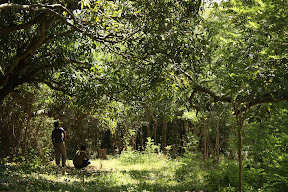
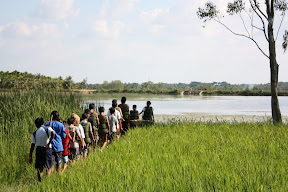
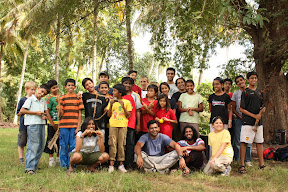
Day 1, we set up tents for some, while the others had to shack out in... shacks. heh. After fashioning fishing poles out of slender bamboos, the afternoon was spent in coracles in the lake, a serene assortment of lotus plants and floating weeds that squeezed through our toes and danced wildly around our legs. Back to camp-site at night, we spent the night telling ghost stories, jokes, and singing songs.
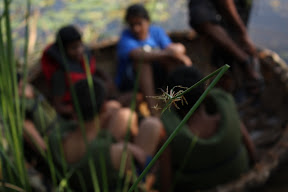
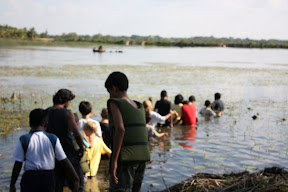
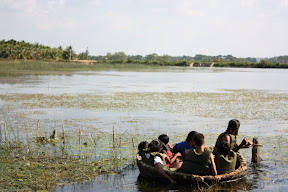
Day 2 we spent building bamboo rafts in the morning, tying them up with wet coir rope in mangled knot-like forms. The afternoon we took em out into the lake and spent some time madly splashing about, weaving through the weed -ridden obstacle course for a while before reaching clear water and sunlight outlined clouds across the universe.
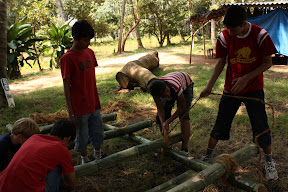
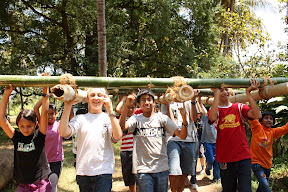
Day 3 we woke up before the cocorocco could doodle di doo, and we were off to Nagarhole for a 3km trek to the birth place of the Lakshmanathirtha River.
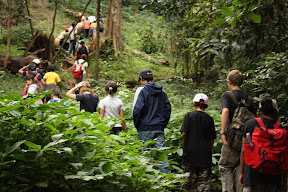
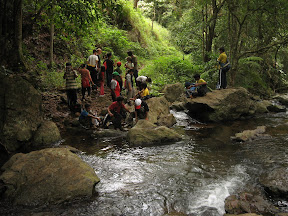
Day 4... loads of games, some coconut tree climbing, some chicken slaying, and then some more games before we headed back to Bangalore. Contentment.
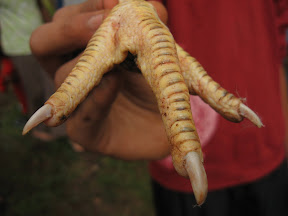
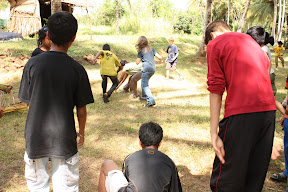
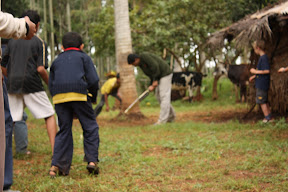
Wild Life

Night Life

Day 1, we set up tents for some, while the others had to shack out in... shacks. heh. After fashioning fishing poles out of slender bamboos, the afternoon was spent in coracles in the lake, a serene assortment of lotus plants and floating weeds that squeezed through our toes and danced wildly around our legs. Back to camp-site at night, we spent the night telling ghost stories, jokes, and singing songs.
Day 2 we spent building bamboo rafts in the morning, tying them up with wet coir rope in mangled knot-like forms. The afternoon we took em out into the lake and spent some time madly splashing about, weaving through the weed -ridden obstacle course for a while before reaching clear water and sunlight outlined clouds across the universe.
Day 3 we woke up before the cocorocco could doodle di doo, and we were off to Nagarhole for a 3km trek to the birth place of the Lakshmanathirtha River.
Day 4... loads of games, some coconut tree climbing, some chicken slaying, and then some more games before we headed back to Bangalore. Contentment.
Wild Life

Night Life
Wednesday, October 01, 2008
Camp in Coorg
Five days spent in the sprawling hills... stream running through, insect life glimpses. The sun awoke each morning, gently kissing away the moon's magical mist and blessed us with days of laughter.
 |
| से Coorg Carnival |
Wednesday, August 20, 2008
Valiathura Pier
History: The 51 year old, 703 foot pier and the godowns behind it are a far cry from the past when up to 50 cargo ships used to call here at a time. Opened in 1956 by the advisor to the Rajapramukh Dr. P.S. Rau, it was the only port along the South Kerala coast.
Supported by 127 concrete piles, the pier had four 3-tonne cranes and one 10-tonner to unload cargo from the ships. Since the pier was located in shallow waters, heavy ships had to anchor in the deep sea and transport their ware in smaller boats. With the development of the Kochi port with facilities for berthing of huge cargo ships, Valiathura lost its significance. It was declared a ‘dead port’ in the early eighties.
All five cranes were dismantled and sold as scrap as disuse and constant exposure to salty winds eroded their structure. The four godowns were rented out to industrial units on the Veli belt. The rails used by trolleys to transport cargo to the godowns have rusted away.
The pier which consumed 571 tonnes of cement and 250 tonnes of steel, cost about Rs.10 lakhs to build. Till today, the fishermen along the coast use the weakened structure to launch their catamarans during the rough monsoon months, when the rough sea makes the beaches inaccessible. They then jump into the sea and swim to the catamarans.
Waves here, very rarely fall below 1 m, and often exceed 4 m during the monsoon period of May to October.
There are many anglers, who occupy strategic points on the pier, holding on to their line, patiently waiting to hook a fish. Avoiding sophisticated angling gear, these people use their hands to hold the line instead of the angling rod.
The anglers here are mostly labourers and daily-wage workers.
The hooks range from 18 to 24 on a single line. There are also hooks that do not need any bait on them. But these should be regularly pulled and loosened in the water in order to attract prey. As the water current is towards the shore, the anglers need something to take the line down to the waters. For this, they use iron weights attached to the line, which provides the thrust while the line is thrown into the sea.
`Malavu', a fish that visits the coastline occasionally from inland waters, is another temptation for the anglers. `Para', `Kanava' and `Kozhiyala' are among the other visitors that swim into the trap.
A few years ago, one of the weakened piles on the right head of the 51-year-old pier developed a crack leading to the collapse of a platform measuring about 20 square feet. And in July 08, a portion of the sidewall gave in to the powerful waves lashing the structure and plunged into the sea.
In 2007, the Harbour Engineering Department announced a project for its reconstruction.
Sources
[http://www.hinduonnet.com/2007/09/05/stories/2007090553410400.htm]
[http://www.thehindu.com/2008/07/03/stories/2008070361260300.htm]
[http://www3.interscience.wiley.com/journal/119492061/abstract?CRETRY=1&SRETRY=0]
Here's a slideshow of pictures captured during my visit there in June 07. For a closer look, clickit
Supported by 127 concrete piles, the pier had four 3-tonne cranes and one 10-tonner to unload cargo from the ships. Since the pier was located in shallow waters, heavy ships had to anchor in the deep sea and transport their ware in smaller boats. With the development of the Kochi port with facilities for berthing of huge cargo ships, Valiathura lost its significance. It was declared a ‘dead port’ in the early eighties.
All five cranes were dismantled and sold as scrap as disuse and constant exposure to salty winds eroded their structure. The four godowns were rented out to industrial units on the Veli belt. The rails used by trolleys to transport cargo to the godowns have rusted away.
The pier which consumed 571 tonnes of cement and 250 tonnes of steel, cost about Rs.10 lakhs to build. Till today, the fishermen along the coast use the weakened structure to launch their catamarans during the rough monsoon months, when the rough sea makes the beaches inaccessible. They then jump into the sea and swim to the catamarans.
Waves here, very rarely fall below 1 m, and often exceed 4 m during the monsoon period of May to October.
There are many anglers, who occupy strategic points on the pier, holding on to their line, patiently waiting to hook a fish. Avoiding sophisticated angling gear, these people use their hands to hold the line instead of the angling rod.
The anglers here are mostly labourers and daily-wage workers.
The hooks range from 18 to 24 on a single line. There are also hooks that do not need any bait on them. But these should be regularly pulled and loosened in the water in order to attract prey. As the water current is towards the shore, the anglers need something to take the line down to the waters. For this, they use iron weights attached to the line, which provides the thrust while the line is thrown into the sea.
`Malavu', a fish that visits the coastline occasionally from inland waters, is another temptation for the anglers. `Para', `Kanava' and `Kozhiyala' are among the other visitors that swim into the trap.
A few years ago, one of the weakened piles on the right head of the 51-year-old pier developed a crack leading to the collapse of a platform measuring about 20 square feet. And in July 08, a portion of the sidewall gave in to the powerful waves lashing the structure and plunged into the sea.
In 2007, the Harbour Engineering Department announced a project for its reconstruction.
Sources
[http://www.hinduonnet.com/2007/09/05/stories/2007090553410400.htm]
[http://www.thehindu.com/2008/07/03/stories/2008070361260300.htm]
[http://www3.interscience.wiley.com/journal/119492061/abstract?CRETRY=1&SRETRY=0]
Here's a slideshow of pictures captured during my visit there in June 07. For a closer look, clickit
Friday, August 08, 2008
Postcard Project in AAWC
A Postcard workshop that Antoinette Maclachlan held with AAWC children, on December 28, 2007 as part of her Indian Kids Postcard Project culminated one month later, on January 29, 2008. The result - 27 hand drawn postcards of Indian Gods, Goddesses, actors and actresses.
Thursday, August 07, 2008
Buxa Duar, (a.k.a Baksa Duar), is one of the oldest towns in Jalpaiguri District of West Bengal. It lies close to India's border with Bhutan.
Buxa Duar Fort is in the eastern Dooars at a height of 867 m (2600 ft), on the Sinchula Range. It guards the Buxa Duar route, the most important of the eleven routes into Bhutan. It is believed that the Buxa Fort was constructed by the king of Bhutan during the 18th century with an intention to protect their country.
The fort was positioned so as to help guard the road connecting Tibet with India via Bhutan, which was famous known as the 'Silk Route'. The British captured this fort at the end of the 18th century and used it a watchtower.
In the 1930's as well as between 1942 to 1946, the fort was used as prison for the freedom fighters of India who was fighting against the British Empire. During this period martyrs like Jiten Gupta, Krishnapada Chakraborty, Major Satya Gupta, Trailokya Maharaj, and Hem Ghosh were kept there.
It has also served as a refugee camp for Tibetans and Bangladeshis.
Because of its historical significance the fort is considered as a place of special importance by the old timers who often visit Buxa fort to recapitulate their memories and to pay their tribute to the martyrs' column. Subash Candra Bose was kept captive at this Fort for sometime. After an exceptionally intense rain, when a landslide occurred taking most of this Fort down with it.
The deciduous forest around the fort now forms part of the Buxa National Park.
Excerpts taken from one article on East-Himalaya dot com and another from India9 dot com
Buxa Duar Fort is in the eastern Dooars at a height of 867 m (2600 ft), on the Sinchula Range. It guards the Buxa Duar route, the most important of the eleven routes into Bhutan. It is believed that the Buxa Fort was constructed by the king of Bhutan during the 18th century with an intention to protect their country.
The fort was positioned so as to help guard the road connecting Tibet with India via Bhutan, which was famous known as the 'Silk Route'. The British captured this fort at the end of the 18th century and used it a watchtower.
In the 1930's as well as between 1942 to 1946, the fort was used as prison for the freedom fighters of India who was fighting against the British Empire. During this period martyrs like Jiten Gupta, Krishnapada Chakraborty, Major Satya Gupta, Trailokya Maharaj, and Hem Ghosh were kept there.
It has also served as a refugee camp for Tibetans and Bangladeshis.
Because of its historical significance the fort is considered as a place of special importance by the old timers who often visit Buxa fort to recapitulate their memories and to pay their tribute to the martyrs' column. Subash Candra Bose was kept captive at this Fort for sometime. After an exceptionally intense rain, when a landslide occurred taking most of this Fort down with it.
The deciduous forest around the fort now forms part of the Buxa National Park.
Excerpts taken from one article on East-Himalaya dot com and another from India9 dot com
 |
| Walking to the Buxa Duar Fort |
Monday, August 04, 2008
Tuesday, July 03, 2007
मय लोवे अफ्फैर विथ थे क्लौड्स हद तो तके न्यू हेइघ्ट्स व्हें....
ई हद थिस त्र्य्स्त विथ थेम
http://s165.photobucket.com/albums/u53/Ridhi_photos/
http://s165.photobucket.com/albums/u53/Ridhi_photos/
Monday, July 02, 2007
Available free/ओपन textbooks
BookPower.org
opensourcetext.org
commontext.org
nongnu.org/fhsst/
otp.inlimine.org
la-press.com/texts.htm
medrounds.org
futureofthebook.org/next/text/
potto.org
textbookrevolution.org
en.wikibooks.org/wiki/Wikibooks_पोर्टल
रेसिवेद विथ थैंक्स फ्रॉम फ्रेडरिक नोरोंहा विया ब्य्तेस्फोराल्ल.org
opensourcetext.org
commontext.org
nongnu.org/fhsst/
otp.inlimine.org
la-press.com/texts.htm
medrounds.org
futureofthebook.org/next/text/
potto.org
textbookrevolution.org
en.wikibooks.org/wiki/Wikibooks_पोर्टल
रेसिवेद विथ थैंक्स फ्रॉम फ्रेडरिक नोरोंहा विया ब्य्तेस्फोराल्ल.org
Saturday, June 30, 2007
मजोर पिताम्ब्रे ऎंड - उन्सुंग हीरो
हेरे'एस अ पोस्टिंग ठाट'एस बीन गोइंग अरौंद फ़ॉर सोम टिम नोव। ई चेच्केद विथ रीडिफ़ न्यूज़ ऎंड इत सीम्स तो बे गेनुइने। नो पेपर हस पुब्लिशेद अन्य्थिंग अबाउट थिस अस येत अस फार अस ई क्नोव... ष्हीईस्ष्ह्ह्। अन्य्वाय, सलुते मजोर पिताम्ब्रे। मई योर सोल रेस्ट इन पास। ऎंड होपेफुल्ल्य, वी'ल सी पास सून। चीर्स!
Shame on Indian Media??? Really what a shame...
By the time u guys read this news, the body of Major Manish Pitambare, who
was shot dead at Anantnag, would have been cremated with full military
honors.
On Tuesday, this news swept across all the news channels 'Sanjay Dutt
relieved by court'. 'Sirf Munna not a bhai' '13 saal ka vanvaas khatam'
'although found guilty for possession of armory, Sanjay can breath sigh of
relief as all the TADA charges against him are withdrawn' Then many
personalities like Salman Khan said 'He is a good person. We knew he will
come out clean'. Mr Big B said "Dutt's family and our family have relations
for years he's a good kid. He is like elder brother to Abhishek". His
sister Priya Dutt said "we can sleep well tonight. It's a great relief"
In other news, Parliament was mad at Indian team for performing bad; Greg
Chappell said something; Shah Rukh Khan replaces Amitabh in KBC and other
such stuff. But most of the emphasis was given on Sanjay Dutt's "phoenix
like" comeback from the ashes of terrorist charges. Surfing through the
channels, one news on BBC startled me. It read "Hisbul Mujahidin's most
wanted terrorist 'Sohel Faisal' killed in Anantnag , India . Indian Major
leading the operation lost his life in the process. Four others are
injured.
It was past midnight , I started visiting the stupid Indian channels, but
Sanjay Dutt was still ruling. They were telling how Sanjay pleaded to the
court saying 'I'm the sole bread earner for my family', 'I have a daughter
who is studying in US' and so on. Then they showed how Sanjay was not
wearing his lucky blue shirt while he was hearing the verdict and also how
he went to every temple and prayed for the last few months. A suspect in
Mumbai bomb blasts, convicted under armory act...was being transformed into
a hero.
Sure Sanjay Dutt has a daughter; Sure he did not do any terrorist activity.
Possessing an AK47 is considered too elementary in terrorist community and
also one who possesses an AK47 has a right to possess a pistol so that
again is not such a big crime; Sure Sanjay Dutt went to all the temples;
Sure he did a lot of Gandhigiri but then........ ...
Major Manish H Pitambare got the information from his sources about the
terrorists' whereabouts. Wasting no time he attacked the camp, killed
Hisbul Mujahidin's supremo and in the process lost his life to the bullets
fired from an AK47. He is survived by a wife and daughter (just like Sanjay
Dutt) who's only 18 months old.
Major Manish never said 'I have a daughter' before he took the decision to
attack the terrorists in the darkest of nights. He never thought about
having a family and he being the bread earner. No news channel covered this
since they were too busy hyping a former drug addict, a suspect who's
linked to bomb blasts which killed hundreds. Their aim was to show how he
defied the TADA charges and they were so successful that his conviction in
possession of armory had no meaning. They also concluded that his parents
in heaven must be happy and proud of him.
Parents of Major Manish are still living and they have to live rest of
their lives without their beloved son. His daughter won't ever see her
daddy again.
(Embedded image moved to file: pic04084.jpg) Major Manish Pitambare
So guys, please forward this message around so that the media knows which
news to give importance, as it is a shame for us since this Army Major's
death news was given by a foreign TV channel!!!
Shame on Indian Media??? Really what a shame...
By the time u guys read this news, the body of Major Manish Pitambare, who
was shot dead at Anantnag, would have been cremated with full military
honors.
On Tuesday, this news swept across all the news channels 'Sanjay Dutt
relieved by court'. 'Sirf Munna not a bhai' '13 saal ka vanvaas khatam'
'although found guilty for possession of armory, Sanjay can breath sigh of
relief as all the TADA charges against him are withdrawn' Then many
personalities like Salman Khan said 'He is a good person. We knew he will
come out clean'. Mr Big B said "Dutt's family and our family have relations
for years he's a good kid. He is like elder brother to Abhishek". His
sister Priya Dutt said "we can sleep well tonight. It's a great relief"
In other news, Parliament was mad at Indian team for performing bad; Greg
Chappell said something; Shah Rukh Khan replaces Amitabh in KBC and other
such stuff. But most of the emphasis was given on Sanjay Dutt's "phoenix
like" comeback from the ashes of terrorist charges. Surfing through the
channels, one news on BBC startled me. It read "Hisbul Mujahidin's most
wanted terrorist 'Sohel Faisal' killed in Anantnag , India . Indian Major
leading the operation lost his life in the process. Four others are
injured.
It was past midnight , I started visiting the stupid Indian channels, but
Sanjay Dutt was still ruling. They were telling how Sanjay pleaded to the
court saying 'I'm the sole bread earner for my family', 'I have a daughter
who is studying in US' and so on. Then they showed how Sanjay was not
wearing his lucky blue shirt while he was hearing the verdict and also how
he went to every temple and prayed for the last few months. A suspect in
Mumbai bomb blasts, convicted under armory act...was being transformed into
a hero.
Sure Sanjay Dutt has a daughter; Sure he did not do any terrorist activity.
Possessing an AK47 is considered too elementary in terrorist community and
also one who possesses an AK47 has a right to possess a pistol so that
again is not such a big crime; Sure Sanjay Dutt went to all the temples;
Sure he did a lot of Gandhigiri but then........ ...
Major Manish H Pitambare got the information from his sources about the
terrorists' whereabouts. Wasting no time he attacked the camp, killed
Hisbul Mujahidin's supremo and in the process lost his life to the bullets
fired from an AK47. He is survived by a wife and daughter (just like Sanjay
Dutt) who's only 18 months old.
Major Manish never said 'I have a daughter' before he took the decision to
attack the terrorists in the darkest of nights. He never thought about
having a family and he being the bread earner. No news channel covered this
since they were too busy hyping a former drug addict, a suspect who's
linked to bomb blasts which killed hundreds. Their aim was to show how he
defied the TADA charges and they were so successful that his conviction in
possession of armory had no meaning. They also concluded that his parents
in heaven must be happy and proud of him.
Parents of Major Manish are still living and they have to live rest of
their lives without their beloved son. His daughter won't ever see her
daddy again.
(Embedded image moved to file: pic04084.jpg) Major Manish Pitambare
So guys, please forward this message around so that the media knows which
news to give importance, as it is a shame for us since this Army Major's
death news was given by a foreign TV channel!!!
Saturday, June 23, 2007
Useful numbers in Bangalore
Airlines
Domestic Airlines
- Air Deccan: 98457-77008
- Air Sahara: 25584417
- Indian Airlines: 140 / 142 / 25226233
- Jet Airways: 25226576 / 25226577 / 25220688 / 25229873
- Kingfisher Airlines: 4197 9797
- SpiceJet: 1800 180 3333 (BSNL)
- GoAir: 1800 222 111 (BSNL)
- Air India: 22277747
- Air France: 2558 9397
- Air New Zealand: 2224 4625
- British Airways: 2227 1205
- Cathay Pacific: 2226 9745
- Delta Airlines: 2227 3439
- Gulf Air: 2559 4242
- KLM Northwest Airlines: 2226 9854
- Kuwait Airways: 2558 6533
- Malaysian Airlines: 2212 2991
- Quantas Airlines: 2225 8594
- Saudi Arabian Airlines: 2227 6614
- Singapore Airlines: 2286 7868
- South African Airways: 2224 4623
- Srilankan Airlines: 2207 5020
- Swiss Air: 2286 7873
- Thai Airways: 4112 4333
- United Airlines: 2224 4620
- Accident Relief Care: 2220777
- Ambicare: 23323560
- Ambu Care: 26342063
- Ambulance Services: 23367548
- Bangalore Hospital: 26562753
- Bowring Lady Curzon Hospital: 25591362
- City Corp-Contonmant: 25571488
- City Corp-City Area: 22277789
- ESI Hospital: 23324112
- Gayathri Hospital: 23352085
- HOSMAT: 25593797
- Indian Red Cross Society: 22264205
- Jayadeva Hospital: 1051
- KC General Hospital: 23341771
- Mallige Medical Center: 22261135
- Mallya Hospital: 22242325
- Manipal Hospital: 25211200
- Ramakrishna Nursing Home: 26633148
- Rotary Life Saving Brigade: 1050
- Sagar Apollo Hospital: 26536700
- Santosh Diagnostic & Scan Center: 25542425
- Sree Chowdeshwari: 23367925
- Shushrutha Ambulance Service: 23447666
- St. Jonhs Ambulance Association: 22295631
- St. Martha's Hospital: 22275084
- St. Philomena's Hospital: 25577046
- Vanivilas Hospital: 26701150
- Victoria Hospital: 26703294
- Yallamma Dasappa Hospital: 22225663
Hutch Customer Care
- Dial 111 from your Hutch phone or 98860 98860
- 94480 24365
- Dail 121 from your Airtel mobile
- 98450 98450 (Prepaid), 98450 12345 (Postpaid)
- All Citibank customers - 2227 2484.
- Citibank Suvidha account holders - 2227 2265.
- CitiBusiness Customers - 2229 4653.
- Citibank Credit Card - 2227 2484
- Priority service to CitiGold Customers, Diners Club Members & Citibank Gold Card members – 2229 4653.
- Bangalore - 4113 1877
- Karnataka - 98455 78000
- Banking related - 2558 9595
- Credit card related - 2558 9696
- Debit card related - 9945863333
- Banking related - 5500 3333
- Credit card related - 6622 4332
- 4124 5555
- Toll Free - 1600 180 1290 (BSNL and MTNL)
- 2537 0615, 2531 7830
- 22297000
- 3030 1969
- 2558 8888
- Complaint Room: 22237455/22221286, Fax: 22223194
- Control Room: 22221188
- Commissioner: 22260707 /22942215 / 98440-99707
- PVR [Forum Mall]: 2206 7511, 787 [Mobile booking], 5110 0787 [Home delivery]
- Inox [Garuda Mall]: SMS Booking 303030, Phone Booking: 5112 8888
- Innovative Multiplex: 2522 5944
- Vaibhav: 23514515 / 23514554
- Cauvery: 23361528
- Rex: 25587350
- Urvashi: 22245551/ 52/ 53
- Symphony: 25585988
- Abhinay: 22872029
- Ajanta: 25514590
- Lavanya: 25362134
- Pallavi: 22223191
- Sagar Talkies: 22263180
- Sangeet: 22865098
- Tribhuvan & Kailash: 22261101
- Lakshmi: 25512716 / 25538179
- BESCOM (CRCO): 22208938
- 24 hours Service (Centralised Complaints): 22267119
- Jayadeva Heart Brigade: 1051
- KIMS Hospital: 26624870
- Manipal Heart Foundation: 25266646
- Narayana Hrudayalaya: 2783500
- Rotary Life Saving Brigade: 1050
- Sagar Apollo Hospital: 26552653
- The Bangalore Hospital: 26565494
- Trinity Heart Foundation: 26563996
- Wockhardt Hospital: 22268888
- Accident: 103
- Emergency Help for entire Karnataka [Operation Sanjeevini]: 1062
- Senior Citizens: 1090
- Women: 1099
- Postal Enquiry GPO: 22866772
- Postal Enquiry City: 22874410
- Speed Post Enquiry: 22867302
- Deputy Commissioner of Police (Traffic)
- Police Commissioner: 98440-99707, 22260707 / 22256242
- Abhaya Hospital: 26564586
- Acura Specialty Hospital: 41105252
- Agadi Hospital: 22222921
- Al-Ameen Hospital: 22912723
- Alfa: 26540041
- Amar Nursing Home: 26602171
- Ananya Hospital: 26607422
- Bangalore Children's Hospital & Research Centre: 28600552
- Bangalore Hospital: 26565494
- Bangalore Institute Of Oncology: 22225644
- Bangalore Kidney Foundation: 26392695
- Baptist Mission Hospital: 23330323
- Bhagwan Mahaveer Jain Hospital: 22207649
- C M Hospital: 25280461
- C S I Hospital: 22861104
- Chaitanya Nursing Home: 23432633
- Charakas Ayurvedic Clinic & Health Centre: 25211801
- Chhaya Nursing Home: 23342339
- Chord Road Hospital: 23225858
- D V G Hospital: 26913925
- Diacon Hospital: 23329909
- Dr B R Ambedkar Medical College & Hospital: 25465860
- Dr Agarwal Hospital: 22223100
- Dr Sita Bhateja's Nursing Home: 22210701
- Eshwar Hospital: 23495080
- Ganesh Nursing Home: 23610331
- Garden City Hospital: 26346555
- Hitech Kidney Stone Hospital: 22207114
- Hope Infertility Clinic: 25583836
- HOSMAT: 25593792
- Institute of Naturopathy & Yogic Sciences: 23717778
- Jayashree Nursing Home: 23440981
- KIMS Hospital: 26527739
- Kshema Hospital & Trauma Centre: 25424751
- Lake Side Hospital: 25360823
- M S Ramaiah: 23606545
- Malik Dispensary: 22385769
- Mallige Medical Centre: 22203333
- Mallya Hospital: 22277991
- Narayana Hrudayalaya: 7835001
- Northside Hospital & Diagnostic Centre: 23620844
- Novanordisk (24 Hours Diabetic Helpline): 1901338014
- Panacea Hospital: 23228649
- Raj Mahal Vilas Hospital: 23417077
- Ramakrishna Hospital: 26656800
- Ramakrishna Nursing Home: 26633148
- Ravi Kirloskar Memorial Hospital & Research Centre: 28394899
- Republic Hospital: 22211762
- Sagar Apollo Hospital: 26536701
- Santosh Hospital: 25367706
- Sevakshetra Hospital: 26714194
- Shekhar Hospital: 23345901
- Sindhi Charitable Trust Hospital: 22231711
- Sri Satya Sai Hospital: 28411500
- St. John's Medical College & Hospital: 22065000
- St. Philomena's Hospital: 25577047
- St. Theresa's Hospital: 23375332
- Tibetan Medical Center: 23496190
- Trinity Hospital & Heart Foundation: 26563993
- Vijayanagaram Ayurved Bhandar: 23198718
- Vittala International Institute of Ophthalmology: 26722214
- Wockhardt Hospital: 22281146
- Yellamma Dasappa Hospital: 22225643
- City Railway Station: 22874544
* Enquiries: 131
* Reservation Enquiries: 132 / 1361
- Unicorn : 9844024365
- Air Link Taxi: 25362222
- KIMS Hospital: 26624870
- Chamundi City Taxi: 25200333 25293222
- City Taxis: 23237191/2
- City Safari: 25539999
- Garden City Taxis: 23437646, 23434274
- Maruthi City Taxi: 23368888, 23369000, 57613332
- Radio Taxis: 23320152
- Raj City Taxis: 23337777, 23634444, 23335666
- Roman Taxis: 25486606, 25486616
- Shree Maruthi City Taxi: 51900000
- Spot Taxis: 25510000
- Taxi Control Room: 23523636
- KSTDC: 22352902
- For Conducted Tours-KSTDC: 22275883
- ITDC: 22254396
- Government of India Tourism Office: 25585417
Subscribe to:
Posts (Atom)